
[Blog post 1] by Nurse Rupi | July 22nd, 2025
When Algorithms Meet Empathy: Navigating Tech in Modern Nursing
“I know why you cry. But it is something I can never do.”
-The Terminator (Cameron, 1991)
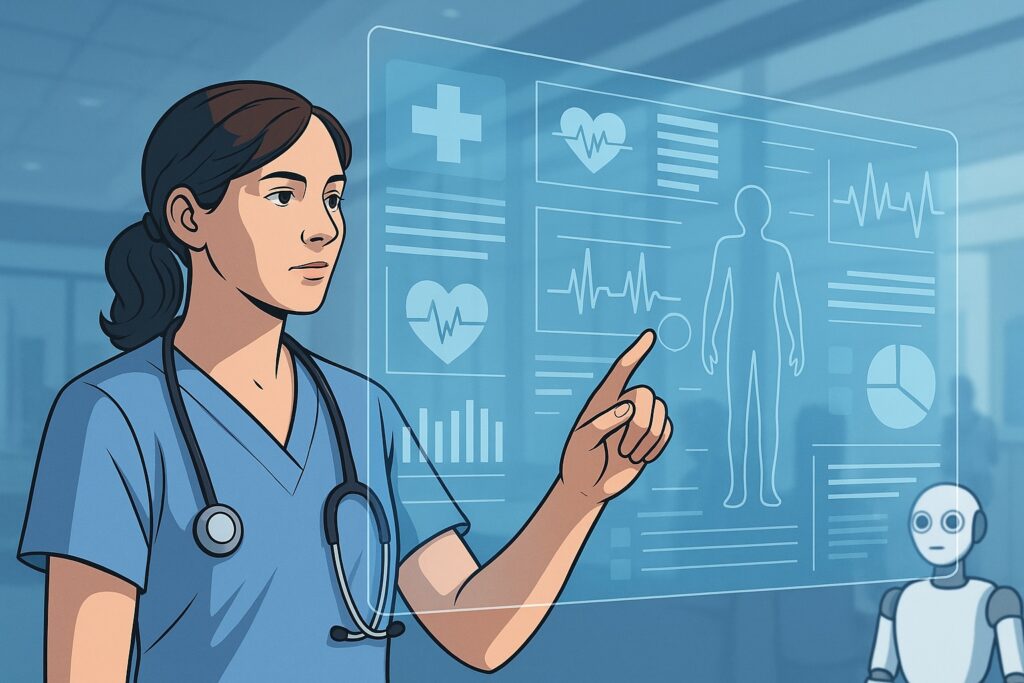
Figure 1. AI-generated image by Rupi Sandhu illustrating the nurse-technology interface in modern practice (Sandhu, 2025).
In Wendy Glauser’s (2017) analysis titled, Artificial Intelligence, Automation and the Future of Nursing, she captures a pivotal truth: technology is redefining nursing, but it won’t replace human presence. From electronic health records to AI, I’ve seen the tension between efficiency and empathy firsthand. During the pandemic, symptom-screening bots offered consistency during chaos. These tools didn’t replace care—they supported it (Laudadio, 2020).
As a nurse educator, I use virtual simulation to help students build clinical reasoning and communication skills. Yet, no simulation can replicate the unpredictability of a distressed family or the emotional tone of an irate patient. Technology creates safe practice environments—but not always realistic ones.
Peplau’s Interpersonal Relations Theory reminds us that the nurse–patient relationship is itself therapeutic. A calm presence, reassuring words, or shared silence carries meaning no algorithm can mimic. I’ve known patients who turn to AI-based therapy, but can it truly replace the healing touch or the nuanced act of bearing witness? Watson’s theory of caring suggests otherwise.
Technology has improved care in specialized areas like dialysis—rapid-result potassium analyzers can prevent crises. But access remains inequitable, tied to geography and funding. I thrive in digital environments and see how thoughtfully designed systems improve workflow. Yet, I also know many nurses feel alienated by impersonal tech.
Ethically, the rise of AI raises questions about bias in algorithms, informed consent, and who is accountable when automated decisions go wrong. Nurses must remain critical voices in how these tools are developed and deployed, ensuring that tech aligns with our professional values of equity, autonomy, and relational care as guided by the CNA Code of Ethics (2017).
Glauser (2017) rightly notes that as AI evolves, nurses will take on more complex roles—not fewer. Technology can enhance nursing, but only if guided by human insight.
References
Cameron, J. (Director). (1991). Terminator 2: Judgment Day [Film]. Carolco Pictures.
Canadian Nurses Association. (2017). Code of ethics for registered nurses (2017 ed.). https://www.cna-aiic.ca
Glauser, W. (2017). Artificial intelligence, automation and the future of nursing. Canadian Nurse. https://www.canadian-nurse.com/blogs/cn-content/2017/05/01/artificial-intelligence-automation-and-the-future
Laudadio, J. (2020). How hospitals are using AI to battle COVID-19. Harvard Business Review. https://hbr.org/2020/03/how-hospital-are-using-ai-to-battle-covid-19
Peplau, H. E. (1952). Interpersonal relations in nursing. Putnam.
Sandhu, R. (2025). Figure 1 [AI-generated image]. NurseRupi.com
Watson, J. (2008). Nursing: The philosophy and science of caring (Rev. ed.). University Press of Colorado.